
Frog Science Activities for Kids (Life Cycle and Habitat Experiments)
Why Frogs Are One of the Best Spring Animals to Study
When March starts to warm up, even just a little, frogs are usually one of the first animals I think about.
I think that’s because one spring when I was about eight, I brought a frog home and asked to keep it. My grandmother said yes, and we put an old aquarium to use. What I remember most, though, is that we eventually had tadpoles.
At the time, I didn’t realize I had brought home a frog that was already carrying fertilized eggs and had no choice but to spawn in our aquarium. But those eggs became tadpoles… and eventually little frogs. Watching that life cycle unfold right in front of me was unforgettable.
This was almost 40 years ago… the 80s, when kids rode in the bed of pickup trucks and McDonald’s had ashtrays. I’m not saying it was the best idea. From the frog’s perspective, I was definitely a frognapper, but it was incredible to see metamorphosis happen in real time.
In general, frogs are small and easy to overlook, but my kids have asked questions about them like:
How do they survive winter?
How do they breathe underwater?
How does something that starts as a tadpole turn into a frog?
Those are the kinds of questions that naturally lead into real biology and simple frog science activities for kids.
Frog Day (March 20th) is a fun excuse to explore them, but frogs are worth studying any time you’re learning about life cycles, habitats, or adaptation.
You don’t need a pond in your backyard, just a few simple ways to make their world visible.
🐸 What Makes Frogs So Fascinating?
Frogs live in two worlds. They begin life in water, and they grow into animals that can live on land. They breathe through gills as tadpoles, but they develop lungs as adults, and they can even absorb oxygen through their skin.
They don’t drink water the way we do, they absorb it through their skin. They don’t survive winter by staying active, in fact, some species actually freeze partially and thaw in spring.
The more you look at frogs, the more you realize how adaptable they are.
🐸 Frog Science Facts
- Frogs are amphibians, meaning they live both in water and on land.
- Their skin must stay moist to function properly.
- Tadpoles hatch from eggs laid in water.
- Frogs undergo a complete metamorphosis, which is unlike most animals we think of.
- Many frogs lay hundreds or even thousands of eggs at once.
- Toads are often thought not to be frogs, but in fact, all toads are frogs, but not all frogs are toads.
🐸 Fun Facts Kids Love
- Some frogs can freeze solid in winter and thaw in spring
- A group of frogs is called an “army”
- Some frogs can jump more than 20 times their body length
- There are frogs that can glide through the air
- Frogs have sticky tongues that can snap out faster than you can blink
⭐ Hands-On Frog Science Activities
Each activity connects to real frog adaptations, life cycle, movement, skin, and habitat.
1. Frog (Amphibian) vs. Mammal Metamorphosis Comparison
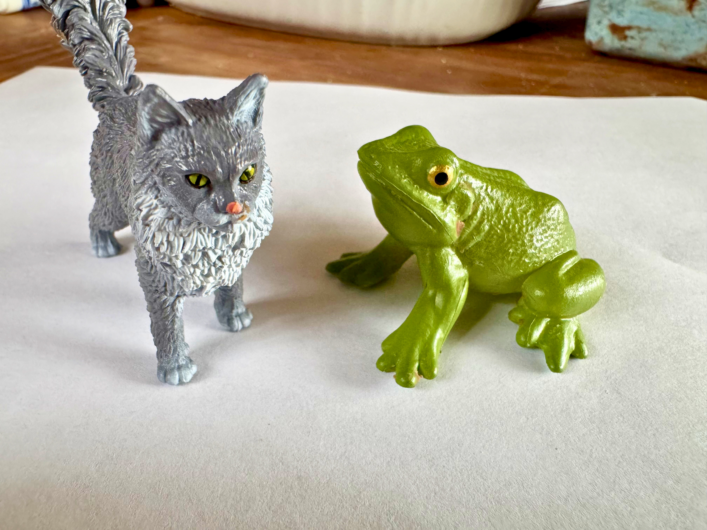
There are many animals in the world that go through a big change as they grow, but not near as many go through a full metamorphosis. Amphibians are a great way to see that and a really fun way to view metamorphosis is to compare the changes between animals.
Compare frogs to a mammal of choice and see that while mammals grow, they don’t change near the way that amphibians do.
You’ll Need:
- Paper or poster (if doing poster)
- Markers
- Optional: two small animal figures or stuffed animals (frog + cat for example)
Step 1:
Ask: “When a kitten is born, what does it look like?”
Kids will say something like… small, cute, eyes closed, hairy, they look like their mom… and so on.
Step 2:
Ask: “What does a frog look like when it’s born?” If they don’t know, pull up pictures of a frog’s life cycle.
Then ask: Does a tadpole look like a frog?
The kids will likely say no. Then create a simple side-by-side chart or poster drawing of differences…
| Mammal | Frog |
|---|---|
| Born looking like a small version of adult | Born looking completely different |
| Grows bigger | Transforms body systems |
| Same basic body plan | Gills → lungs |
| No tail change | Tail disappears |
This allows metamorphosis to really show different because you can use several mammals, birds, reptiles, and even fish in this way.
2. Frog Jump Investigation
Frogs are built to jump. And conveniently… so are kids. This is one of those activities that takes almost no prep but ends up being surprisingly memorable.
You’ll need:
• Measuring tape
• Masking tape
• A little open space (living room, driveway, backyard)
What You’ll Do:
- Start by putting a piece of tape on the floor as a “pond edge.”
- Have your child stand behind the tape and jump as far as they can from a standing position. Measure the distance and mark it with another piece of tape.
- Let everyone take a turn. Compare distances.
- Then introduce the frog fact:
- Some frogs can jump more than 20 times their body length.
- Measure your child’s height. Multiply it by 20. (You can round to keep it simple.)
- Then ask… if you were built like a frog, how far would you just have jumped?
For most kids, the answer is shocking. It’s often the length of a house or more. This is where math meets biology in a way that is really fun!
You can talk about:
• Why frogs need powerful back legs
• How their muscles are built for quick bursts of energy
• Why jumping is safer than walking slowly in the wild
If you want to extend it, try this, have your child squat low and jump. Then try jumping without bending much. Which felt stronger?
Frogs are designed for explosive movement. Their long back legs and compact bodies make them incredibly efficient jumpers. This could be a great time to look at frog anatomy too!
It’s simple, it’s active, and it turns a quick afternoon activity into a real understanding of structure and function. My kids loved the times we learned like this!
3. Moisture & Skin Experiment
One of the most interesting things about frogs is that their skin isn’t just protective, it’s functional. Frogs absorb water through their skin and need moisture to survive. That’s why you rarely see frogs far from water for long. Here’s a simple way to see why.
You’ll Need:
- Two small sponges
- A bowl of water
- A plastic bag
- A sunny window or sunny location
- A plate (optional)
What You’ll Do:
- Start by soaking both sponges in water until they’re equally wet.
- Place one sponge inside a plastic bag (to trap moisture).
- Place the other sponge out in the open air, ideally in sunlight. (use optional plate here)
- Leave them for a while. Check back in 30-60 minutes.
- Now compare.
- Which sponge feels drier?
- Which one stayed soft and moist?
That difference is what frogs experience in different environments. In dry conditions, moisture disappears quickly. In humid or wet environments, moisture is retained.
Now ask some questions to get the mind going…
If you were a frog, where would you need to live?
What would happen if your pond dried up?
Why are wetlands so important?
This turns a simple sponge test into a conversation about habitat, ecosystems, and why amphibians are often the first to be affected by environmental change.
4. Frog Habitat Sensory Play
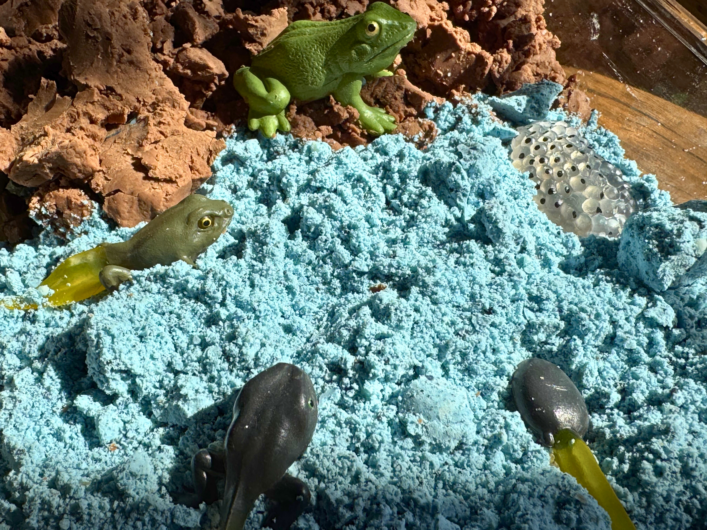
If you want something hands-on for your frog science activities, create a small pond habitat.
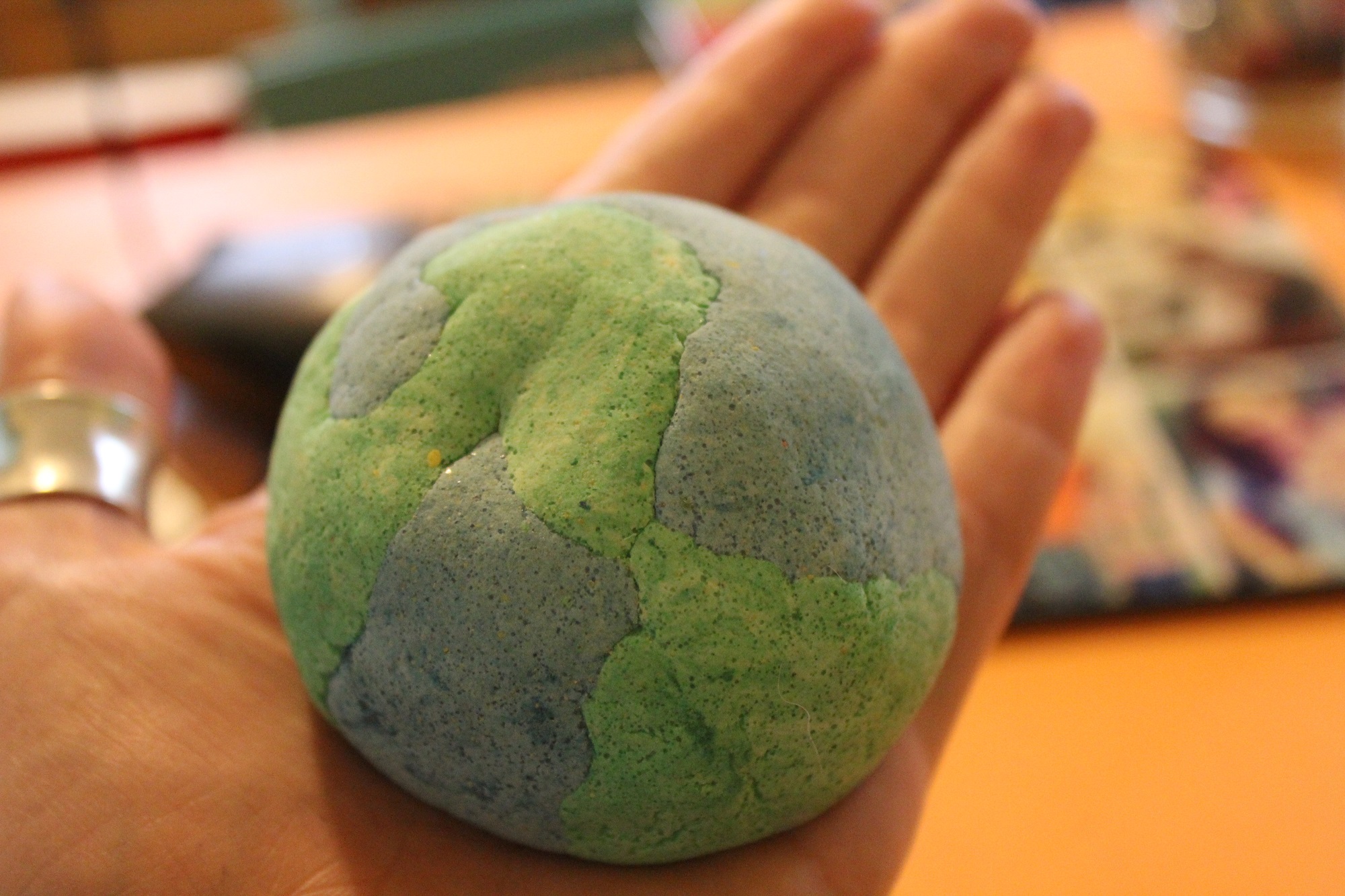
This is a great excuse to make Mud and Water Dough recipes. They are fun to play with and make great sensory play or are great for dioramas. You can see we used a life cycle frog play set with the habitat doughs.
Alternatively, you can use actual dirt and water!
Set out:
- Tray for water
- Box or shallow tray (if not using water)
- Mud dough and Water dough (if not using real dirt and such)
- Pebbles, actual dirt, and twigs
- Frog figurines
Kids can build:
- habitats
- mimic life cycles
- ponds to better understand ecosystems
It becomes science without feeling forced and this works beautifully across ages as older gets simply get more detailed.
👉 See Water Dough recipe
🛒 Build a Frog Learning Basket
To extend learning gently, gather:
• Frog figurines
• Pond-themed books
• Life cycle puzzle
• Frog anatomy tools
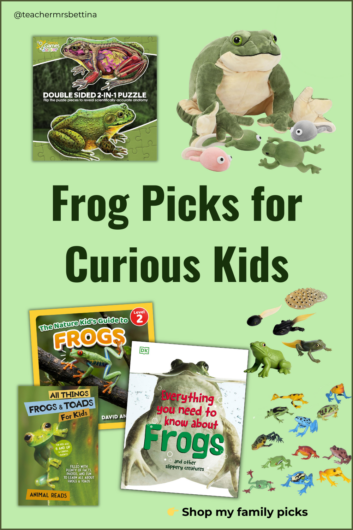
👉 See our Frog Learning Favorites here
📄 Free Printable: Science Log
If your kids enjoy these activities, the Science Log works perfectly here, for observations, recording ideas, or sketching habitats. It’s the same one we use for STEM posts throughout the year.
Kids can:
- Sketch life cycles
- Record jump measurements
- Write habitat observations
- Compare frogs to other amphibians
👉 Download the free Science Log
🐸 Frog Learning Unit – In development
I’m currently working on a Frog Learning Pack to go alongside these science activities. It’s designed to help kids understand not just frogs, but the environment they depend on.
• Detailed life cycle pages
• Amphibian comparison charts
• Habitat & ecosystem maps
• Label-the-frog anatomy
• STEM measurement activities
👉 Notify me when the Frog Unit is ready
🐸 Final Thoughts on Frogs
Frogs remind us not all changes are bad, some mark growth. Studying frogs reminds kids that growth isn’t instant… it happens in stages. Sometimes it is even unseen.
Whether you celebrate Frog Day in March or study amphibians any time of year, these simple activities make science feel real and approachable.
If you try any of these frog science activities, I’d love to hear about it. Tag @bemandfam on Instagram or Facebook, those glimpses into real homes always mean more than you know.
BEM and Fam 🙂