
Pig Science Activities for Kids – Hands-on STEM
Why Studying Pigs Is More Interesting Than You Think
I’ll be honest, pigs weren’t on my list of “wow” animals when the kids were little, but boy were they in tons of storybooks. It was natural that kids would be curious about farm animals, especially how they are featured in so many books and shows. The more we studied them, the more I realized how much we misunderstood.
Pigs aren’t dirty, they’re strategic. They aren’t simple… they’re incredibly intelligent. And once you start asking questions about how they live, things get interesting quickly.
- Why do pigs actually roll in mud?
- Are they really dirty?
- How strong is their sense of smell?
- How have humans relied on pigs for thousands of years?
Pig Day (March 1st) is a great excuse to take a closer look, but these pig science activities for kids work any time you want to turn a regular afternoon into something a little more thoughtful.
🐷 What Makes Pigs So Fascinating?
Pigs challenge a lot of assumptions and have for thousands of years.
- They’re often labeled as dirty animals, but the mud they roll in serves a purpose. It cools them down and protects their skin. What looks messy is actually adaptive.
- They are highly intelligent, capable of problem-solving and learning quickly, yet most people only think of them as livestock. That tension alone makes them interesting to study.
- Their sense of smell is powerful… strong enough that pigs have historically been used to find truffles buried underground.
- Domestic pigs live on farms, but they are closely related to wild pigs, which in some regions are considered invasive species. That contrast opens up conversations about agriculture, ecosystems, and how humans shape animal populations.
When you look past the stereotypes, pigs are layered, capable animals with real biological strengths. That’s what makes them worth studying.
🐷 Pig Science Facts
- Pigs have very few functional sweat glands, which is why temperature regulation is such a challenge for them.
- A pig’s snout contains cartilage and strong muscles that allow it to lift soil and dig for food.
- Pigs have a strong memory and can learn tasks quickly when motivated by food or routine.
- Their digestive systems are similar to humans, which is why pigs are often studied in medical research.
- Domestic pigs were selectively bred from wild pigs, which explains both their similarities and differences
⭐ Hands-On Pig Science Activities
Each activity connects to real pig adaptations… temperature regulation, smell, habitat, and survival.
1. Why Do Pigs Roll in Mud? (Cooling Experiment)
Instead of assuming mud makes pigs dirty, test what it actually does.
You’ll Need:
- Two small thermometers (or use the back of your hand)
- Damp paper towel
- A lamp or sunny window
- Wrap one thermometer lightly in a damp paper towel (representing mud). Leave the other uncovered. Place both near a heat source.
- Check after 10–15 minutes.
- Which one feels cooler?
- Explain that as moisture evaporates, it cools the surface underneath. Pigs use mud to help regulate their body temperature and protect their skin.
This simple test makes the adaptation visible.
2. How Far Can a Pig Smell? (Distance Challenge)
Pigs are famous for finding truffles underground, sometimes as far down as 25 feet, because of their powerful noses. Under ideal conditions, pigs can detect certain scents from 5-7 miles away. That’s hard to imagine, so test your own limits.
You’ll Need:
- A strong scent (vanilla or peppermint extract, rubbing alcohol…)
- Open space
- Tape measure or pacing
- Have one person hold the scent and slowly increase the distance between you. At what point can you no longer smell it?
- Then, pull up a map and measure five miles from your house and take a drive… the scale alone makes the conversation interesting.
This connects biology with math and geography in a very natural way. Points for making 5 miles away a fun spot… like an ice cream shop!
3. Farm Mud Dough
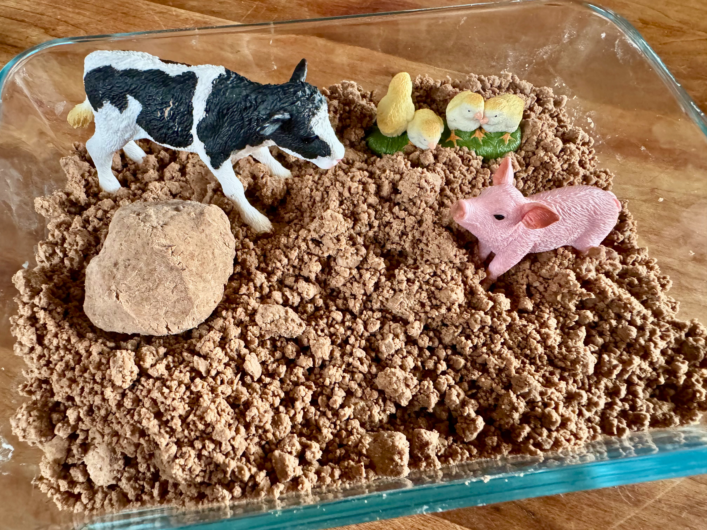
This is hands-on, but also rooted in real pig behavior… and is a great excuse to make mud dough.
Set out…
- a tub
- the mud dough
- pig figurines
- farm toys
Kids can play with the mud, mimic rooting and how the mud protects the skin. The dough itself is fun, even my teens like playing with it.
👉 See the Mud Dough Recipe here
This works beautifully across ages and invites both science and storytelling. Grab a book and let the kids play!
🛒 Build a Pig Learning Basket
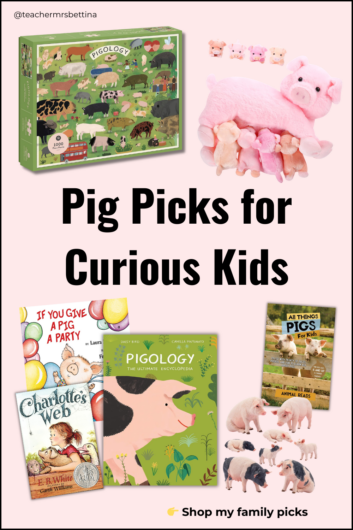
If you want to extend learning, a small basket goes a long way. I put together a list of things we have used that includes…
- Pig figurines
- Farm picture books
- Simple farm puzzles
- Soil or sensory tools
👉 Browse the Pig Learning Basket Amazon List
📄 Free Printable: Science Log
If your kids enjoy these activities, the Science Log works perfectly here, for observations, recording ideas, or sketching habitats. It’s the same one we use for STEM posts throughout the year.
Download the free Science Log here
🐷 Pig Learning Unit – A Budding Biologist Pack
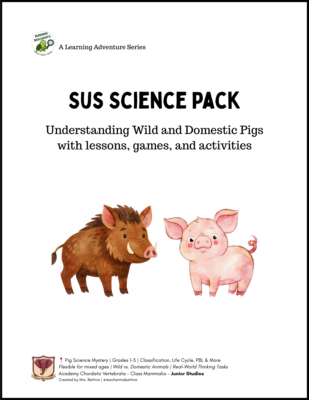
If your kids enjoy digging deeper, my Sus Science Pack (as pigs and wild pigs are from the Genus Sus) expands on these ideas with:
- Pig anatomy pages
- Adaptation mini-book
- Life cycle study
- Rooting & habitat lessons
- Field notes
- Writing prompts
- STEM extensions
This is designed to be used at home, in co-ops, or even in the classroom. And while it is a stand-alone unit, there is the opportunity to turn it into a deeper connected learning experience through the Academy Chordata Vertebrata… which is my part of my Teacher Mrs. Bettina brand.
👉 Explore the Budding Biologist Pig Unit here
🐷 Final Thoughts on Pigs
Pigs remind us not to judge too quickly and studying pigs helps kids rethink assumptions, understand structure and function, and see how even familiar animals have surprising strengths.
Whether you celebrate Pig Day (March 1st) or explore pigs any time of year, these simple activities bring real learning into early spring afternoons.
If you try any of these pig science activities for kids, I’d love to hear about it. Share in the comments or tag @bemandfam on Instagram or Facebook.
BEM & Fam 🙂