Shakespeare Activities for Kids – Simple, Creative Ideas to Bring His Stories to Life
Celebrating Shakespeare Day – A Literature Adventure
April 23rd marks the celebrated birthday and widely believed date of passing, of one of the most well-known writers in history… William Shakespeare. Now, I’ll be honest, Shakespeare can feel a little intimidating at first.
The language is different and sometimes it’s hard to know where to even begin, but when you step back a little, what he wrote about is actually very familiar:
- love
- jealousy
- ambition
- friendship
- mistakes and consequences
The same things we still talk about today, and that’s what makes Shakespeare worth exploring… even in simple ways.
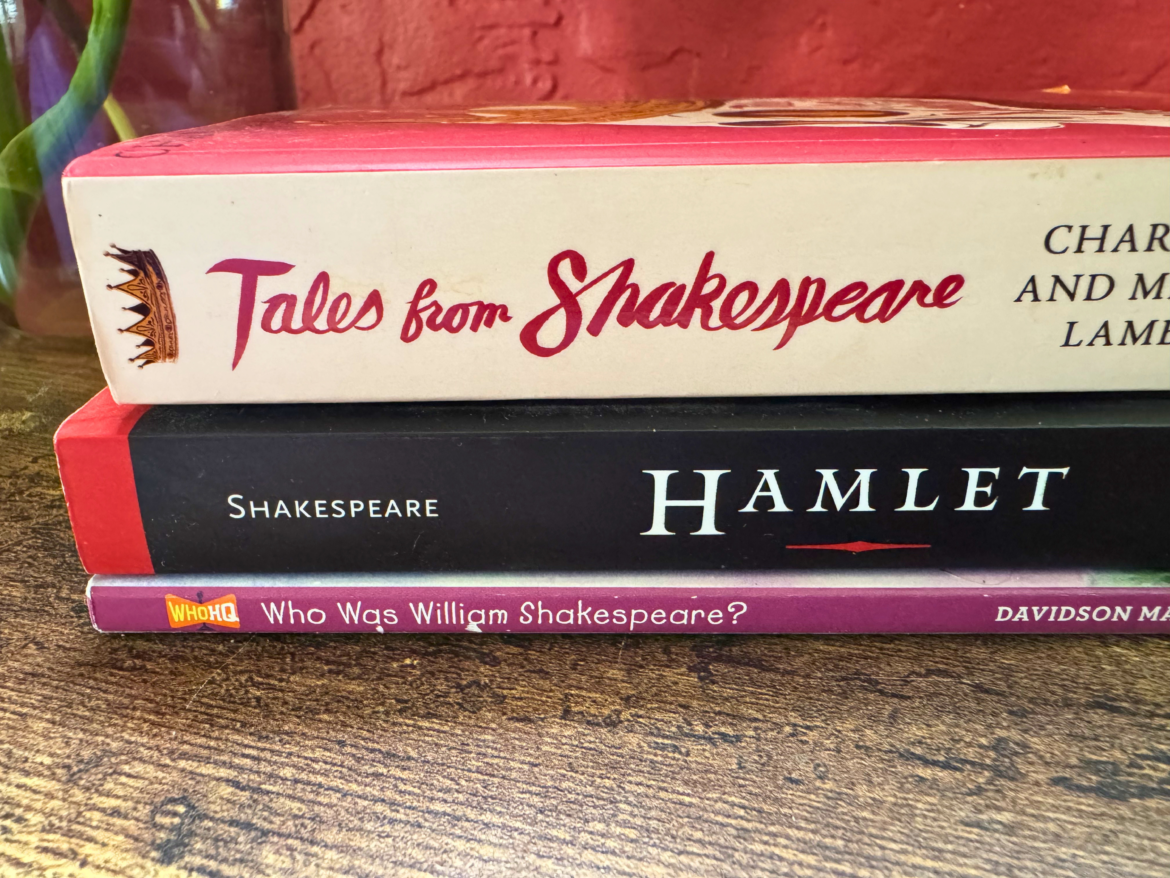
Who Was William Shakespeare?
William Shakespeare was born in 1564 in Stratford-upon-Avon, England, a small town surrounded by farmland and everyday life. As an adult, he moved to London, where he became involved in the theatre world… acting, writing, and eventually becoming one of the most influential playwrights of all time.
His plays were performed at places like the Globe Theatre, where audiences gathered to watch stories unfold live, reacting in real time. He didn’t just write plays, he helped shape the English language itself. Many of the phrases we still use today came from his work.
Reading Shakespeare as a Family
Shakespeare doesn’t have to be “all or nothing.” You don’t need to sit down and read an entire play start to finish to appreciate it.
Here are a few simple ways to bring it into your home:
| Age Range | How to Experience It |
|---|---|
| Younger Kids (7–10) | Read short, adapted stories or focus on characters and themes. Act out simple scenes. |
| Middle Grades (10–13) | Read excerpts and talk about choices characters make. Try rewriting lines in modern language. |
| Teens (14+) | Explore full scenes or plays. Discuss themes like ambition, love, and consequences. |
| Family Option | Watch a scene or adaptation together and pause to talk about what’s happening. |
Weekly Idea: Pick one short scene or quote and talk about it together. Make a “Shakespeare Reading Night”!
Hands-On Fun: Bring Shakespeare to Life
Shakespeare was meant to be performed, not just read. Here are a few Shakespeare activities for kids to make it feel real!
1.Write Like Shakespeare (But Keep It Simple)
Shakespeare is actually responsible for more everyday phrases than most people realize.
Things like:
- “break the ice”
- “wild-goose chase”
- “green-eyed monster”
Once kids realize that, Shakespeare becomes part of everyday. Instead of feeling like they’re reading something old or complicated, they start to see how language connects across time.
You can keep this really simple. Pick one phrase and:
- talk about what it means
- try using it in a sentence
- or rewrite it in your own words
Sometimes we’ll turn this into a quick little challenge… who can come up with the funniest or most creative sentence using the phrase.
2. Think Like a Playwright
Shakespeare didn’t just tell stories, he created characters, conflicts, and moments that people could feel as they watched them unfold. That’s something kids can try too.
You don’t need to write a full play for this to work. Start small.
You can:
- come up with two characters
- give them a simple problem
- and write (or say) a short scene between them
Or… you can let the kids write and act out a play!
It doesn’t have to be perfect. The goal is just to step into that role for a minute and see what it feels like to create a story from the inside.
3. Make a Shakespearean Ruff

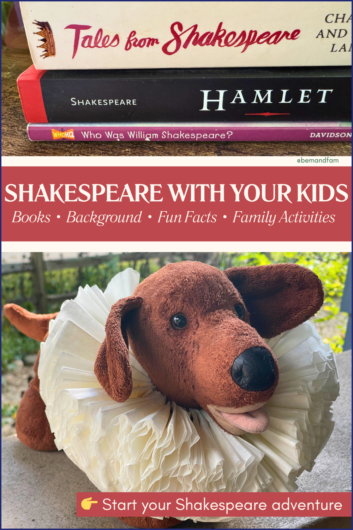
If your kids are anything like mine, adding something hands-on changes everything. A simple ruff (those collars you see in old portraits) is an easy way to bring the time period to life without overcomplicating things.
You can make one using:
- coffee filters
- string or ribbon
It’s quick, a little messy, and surprisingly fun. Take it a step further and let the kids try to dress-up with their ruff. Then, take a picture like a painted portrait from Shakespeare’s time!
👉 Check out the Shakespearean Ruff post here
⭐ Want Something Ready-to-Go?
If you’d like something that brings all of this together in one place, I created a Shakespeare Literature Unit that walks through his life, the theatre world, and his lasting impact in a simple, approachable way.
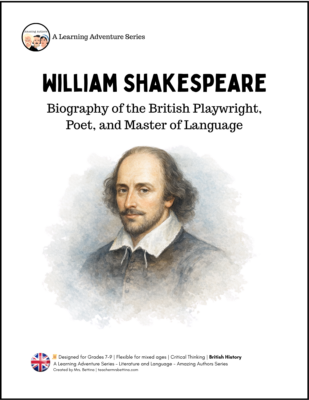
It includes:
- short reading sections
- vocabulary and reflection pages
- creative writing activities
- hands-on extensions (including a Shakesperean inspired recipe)
- and even a Kahoot review for a fun wrap-up
👉 You can explore the full Shakespeare unit here
🎬 Optional Idea: Start with a Movie
If reading Shakespeare feels like a stretch right now, starting with a movie can be a really easy way in. There are a few family-friendly options that connect to his stories without feeling overwhelming.
Gnomeo & Juliet is a lighter, kid-friendly version of Romeo and Juliet that keeps the main idea but makes it more playful.
The Lion King is another great one. It isn’t labeled as Shakespeare, but it closely follows the story of Hamlet… with themes of family, loss, and stepping into responsibility.
You can watch together and just pause here and there to talk about what’s happening.
- Why did that character make that choice?
- What would you have done?
- Do you think it would end differently if it were set today?
It doesn’t have to turn into a full discussion… just a few small conversations can go a long way.
❤️ Final Thoughts
Shakespeare doesn’t have to feel complicated. At its core, it’s just storytelling about people… what they feel, what they choose, and what happens next. When you approach it that way, it becomes a lot more approachable… and even a little fun. I think these Shakespeare activities for kids really help make it all approachable!
Download my Shakespeare Author Study Printable to add this to your homeschool or classroom binder and keep the adventure going.

I’d love to hear your thoughts on these Shakespeare activities for kids, or about Shakespeare and his words! Comment below or head over to Instagram or Facebook, share your pics, and tag me @bemandfam… I’d love to see them!
BEM and Fam 🙂
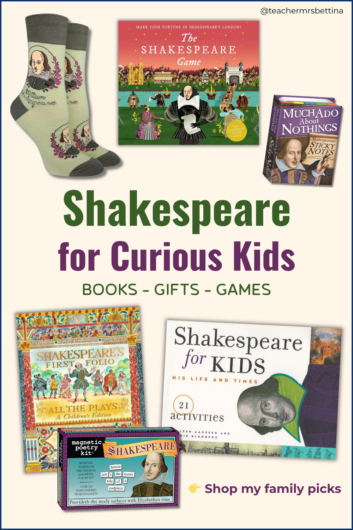
Save This for Later

PS. This post has some affiliate links, read more about those here.