Thomas Jefferson Activities for Kids
Projects, Lessons, and Ideas for Home or Classroom
Thomas Jefferson has always been interesting to my kids, especially my daughter, since they share a birthday. She also likes to remind me that he brought foods like macaroni and cheese and ice cream back from France, which makes him pretty memorable in our house. Those were favorite foods when my kids were little, so somehow that connection has always stuck.
Jefferson is also one of those historical figures people tend to have strong opinions about. I’m not going to get into everything here, but I do think it’s important to read more about him beyond quick summaries or talking points.
He lived during a time when slavery existed almost everywhere in the world, and he himself was part of that system, but he recognized in the middle of living in it… that it was wrong and needed to change. In his original draft of the Declaration of Independence, he included a passage criticizing slavery and the slave trade. That section was removed during revisions by other delegates.
What came later was the thought that individual farmers could make small changes which would allow for real, lasting change. This is usually called Enlightenment. Of course, that was naive, as not everyone wanted change, and sadly, Jefferson and several founding fathers realized that ending slavery would probably end in war… and they were right.
What remains is complicated, but also important.
Jefferson wrote the words “all men are created equal,” and those words have carried forward far beyond his lifetime, shaping conversations about freedom and equality not just in America, but around the world.
History isn’t always simple, and people aren’t either. But I do think Jefferson is worth learning about, especially with kids, because his story opens the door to bigger conversations about freedom, growth, and understanding the past more fully.
To really understand him, it helps to step back and look at the basics first.
🏛️ So… Who Was Thomas Jefferson?
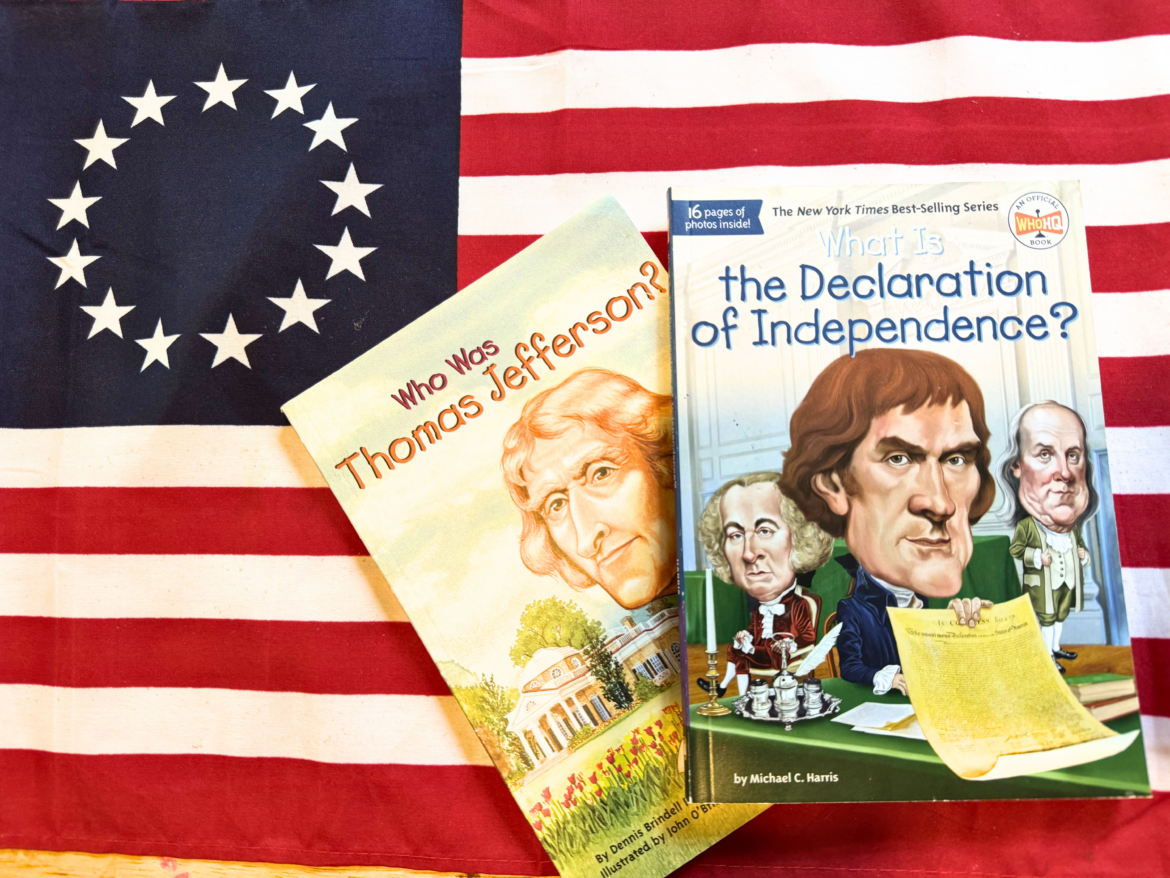
Most kids first hear Jefferson’s name connected to the Declaration of Independence, but that’s really just the starting point.
- He was born in 1743 in Virginia
- He was nicknamed Mr. Mammoth because he was so tall (kids love this one and you can introduce mammoths)
- He was the main author of the Declaration of Independence (did most of the actual writing), though he was part of a group called the Committee of Five, and it also included…
- Benjamin Franklin (click to see some STEM activities relating to Franklin)
- John Adams
- Roger Sherman
- Robert Livingston
- He was Governor of Virgina, second Vice President, and third President of the United States
- He helped double the size of the U.S. through the Louisiana Purchase
- He designed his own home (Monticello) and really enjoyed architecture
- He started the University of Virginia (an accomplishment he was proud of)
- He spoke multiple languages and played violin
- He collected books and helped build one of the largest personal libraries of his time
But those facts only tell part of the story.
📜 Why He Still Matters
What I find interesting isn’t just what Jefferson believed, it’s that he kept revisiting those ideas over time. Jefferson helped shape some of the core ideas of America:
- Freedom and independence
- The importance of education
- The idea that people should think for themselves
- The belief of smaller governments
What also stands out most is that he didn’t stop learning once he became successful. He kept reading, building, planting, experimenting, and that’s something kids can actually relate to.
🌱 Jefferson Beyond History
Jefferson wasn’t only a figure in American history, he also loved science. He wasn’t a “scientist” in the way we think of today, but he was deeply interested in:
- Plants and gardening
- Architecture and design
- Mapping and land exploration
- Food and cooking (he brought new foods back from Europe)
At Monticello, he kept detailed notes on what he planted, what grew well, and what didn’t. He worked on inventions to help the home run smoother. He treated everyday life like something worth observing. He often used the scientific method, without knowing it, to tackle issues. This makes learning about Thomas Jefferson even more interesting because it allows for STEM activities!
This is usually the part that clicks for kids… realizing he wasn’t just a name in a book, but someone constantly trying to figure things out.
🔎 Simple Jefferson-Inspired Activities
These aren’t complicated or overly academic. Just simple ways to bring him to life a bit. One of the easiest ways to make Jefferson real is to let kids step into his role for a moment.
1. Write Your Own Declaration
Thomas Jefferson didn’t just write words, he made an argument. He listed problems, explained why they mattered, and then clearly stated what needed to change. That’s something kids can do too… in a way that actually connects to their real life.
This simple Declaration activity is one I did with my kids but also still do with my students in my American History 1700s class. I’ve had students get creative by wrinkling paper or using tea to stain paper!
This is one of those activities that always surprises me a little. Kids have strong opinions, they just don’t always have the structure to express them.
Step 1: Choose Your “Cause”
Have kids choose something they genuinely care about to declare against or from… and this can be done at home or in a classroom.
👉 Keep it simple but real:
- “We should have more time outside”
- “Homework should be shorter”
- “We should get more choice in what we learn”
Step 2: Build the Argument (Jefferson Style)
Instead of just writing opinions, guide them like this:
- What is the problem? What feels unfair or needs to change?
- Why does it matter? How does it affect you or others?
- What should happen instead? What’s your solution?
👉 Sentence starters (very helpful for younger kids):
- “We believe that…”
- “It is not fair that…”
- “This matters because…”
- “We propose that…”
Step 3: Present & Defend
This is where it becomes multi-curriculum. Have kids…
- read their declaration out loud (speaking)
- explain their thinking (critical thinking)
- answer simple questions (presenting)
Step 4: The “Reality Check”
After presenting, talk through the declaration and ask…
- Would this work for everyone?
- What might be difficult about it?
- Does anything need to change?
👉 This naturally leads into conversations about compromise, rules, structure and so on!
Step 5 – Optional Extension: Create a Simple “Constitution”
Jefferson was not part of the writing of our Constitution, though there were several likeminded people there. His ideas of smaller government are one of the reasons why America is founded on checks and balances.
This extension focuses on the “next step” scenario after the declaration. Once ideas are discussed, kids can turn their best ones into 3–5 “family rules” or “class agreements”
This is a great way to show:
👉 Declarations = ideas
👉 Constitutions = how those ideas actually work in real life
Step 6 – Optional Extension: Build Your Own Country
A country is more than documents. Have students design a flag, draw a map, and decide what are the country’s typical interests. This can be a really fun extension or a standalone exercise.
Another way to take this farther is to have learners present their country in a presentation.
This could be done with a play, a general presentation (board display or slide show), or a simple speech. If you wanted to give older leaners more to think about, ask them to compare and contrast their country to the United States.
2. STEM Challenge: Design & Build Like Jefferson
Thomas Jefferson was a fan of ancient Roman architecture. He designed his home, Monticello, and he also designed some of the buildings at the University of Virgina. Thomas Jefferson carefully thought about light, space, function, and how people would use the space.
He also loved gadgets and had several made to his specifications to make life easier for the house. This wasn’t just about what looked nice. It was about creating something that worked well. That’s the idea behind this challenge.
I actually had an assignment like this when I was young, though it wasn’t tied to Jefferson, and I loved it. We walked around a neighborhood sketching the home we liked best. I liked a blue four-square home and built one out of match boxes and painted it blue. Some 40 years later… I live in a four-square home that we painted blue. When we bought the home and later painted it… the exercise was the farthest thing from my mind, but when I challenged my kids to this… I had to wonder if that home didn’t influence me more than I thought.
That’s the beauty of this type of learning!
Step 1: Think Before You Build
Ask kids to design a building, a home, school, church, or any space they would like. Before jumping into materials, have kids plan what their space needs, what it will be used for, and what it would need to make life better (or more fun).
👉 Give them 3 design goals:
- Comfort (What makes it feel good to live there?)
- Function (What makes it work well?)
- Creativity (What makes it unique?)
💡 This is where it becomes design thinking, not just building
Step 2: Create a Simple Blueprint
Have kids sketch their home first and include rooms, spaces, doors, windows, outdoor areas, and so on. Challenge each kid according to their level. This could be done with a ruler, teaching about measurement and even legends.
💡 You’re introducing planning before execution (huge skill)
Step 3: Build a Model
Now have them bring it to life in a way that interests them. They can use…
- LEGO
- cardboard boxes
- Minecraft
- popsicle sticks
👉 Add a simple constraint (this is what makes it STEM): Must include at least 3 features that serve a purpose
Examples:
- Windows for natural light
- Storage space
- Outdoor area
- Separate quiet/work space
Step 4: Explain the Design
Have kids walk through their home and explain why they chose their design, what problems it solved, and what they could or would change.
Step 5: Improve It (Jefferson Mindset)
Jefferson constantly revised his designs. Ask your kids or students what they would change or what didn’t work. This teaches problem solving, flexibility, and iteration.
3. Start a Small Garden
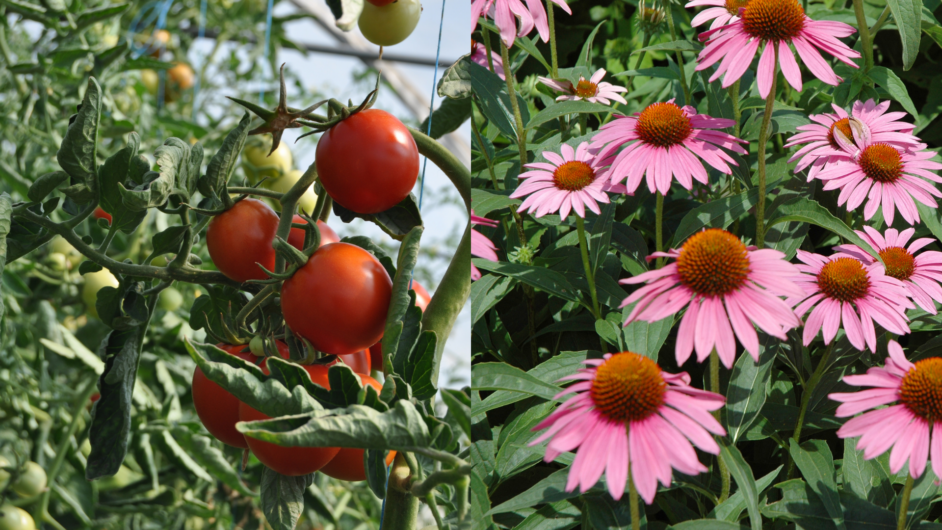
One of the quieter parts of Jefferson’s life, but one that I think matters, is how much attention he gave to plants and food. He grew a wide variety of crops and kept detailed notes about what worked and what didn’t.
At one point, tomatoes weren’t widely trusted to be edible. Jefferson helped change that simply by growing them and serving them. He also planted and studied new plants brought back from the Lewis and Clark Expedition, including echinacea (also known as coneflowers, seen above).
There’s something simple about this that works really well with kids. Try planting a small garden or even just one plant… or maybe plant both tomatoes and echinacea for a Thomas Jefferson garden!
This is a fun and lasting way (especially with echinacea as they are perennials) to create a connection with Jefferson, and honestly, I have found tomatoes and echinacea two of the easiest plants to grow!
4. In the Kitchen with Jefferson
One of the things my kids remember most about Thomas Jefferson isn’t politics or documents… it’s food.
Jefferson spent time in France, and when he came back, he didn’t just bring ideas, he brought recipes with him. Foods like macaroni and cheese and ice cream weren’t completely new, but they weren’t common in early America either. He also helped introduce things like French-style cooking, potatoes prepared in new ways (like what we’d think of as fries), and even more formal dining habits.
Research more about the recipes that Jefferson popularized or check out our homemade Macaroni and Cheese recipe!
⭐ Want to Explore Thomas Jefferson Even More?
If your family is enjoying learning about Jefferson, I put together a few things that will bring history to life. This is exactly what I put together for our own studies.
1. Thomas Jefferson Education Unit
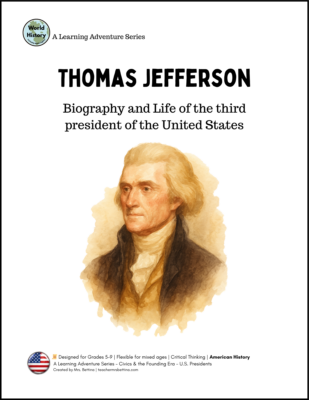
I have built an interactive and hands-on Thomas Jefferson unit that includes 7 lessons to help students learn more about Jefferson and his life. It includes…
- 7 lessons with a timeline
- links to interactive games
- flashcards
- activities… compare and contrast, word search, and crossword
- map
- Who Decides? game – a dice game that showcases Jefferson and Hamilton’s views on government
- schedule suggestions
- ticket in ideas
- Beyond the Lesson pages – ideas to extend the lessons
This is designed to be used at home, in co-ops, or even in the classroom. It is a guided unit but is able to be flexible.
👉 Explore the Thomas Jefferson Unit here
2. Build a Jefferson Learning Basket
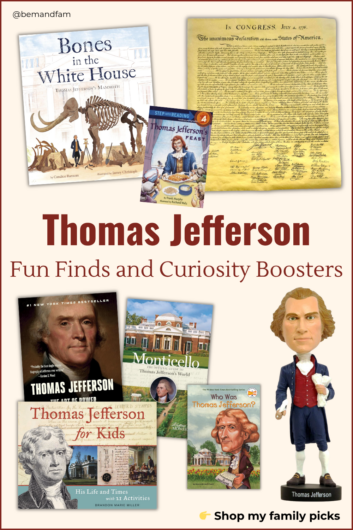
If you want to dive deeper, I put together a small Jefferson Amazon list with:
👉 Check out the Jefferson Amazon list
3. Visit Monticello
For those that have the chance to visit Monticello, I would recommend it… but there are digital tours too! Check out this page on Monticello.org to see how to set up a digital tour or history lab… many of them are FREE!
🧠 Final Thoughts
Thomas Jefferson was an interesting man. Some say he was ahead of his time and others think he deserves to live in the past. However you view him, there is no denying that he changed not only American history, but world history.
If you try any of these Thomas Jefferson activities for kids above, I’d love to hear how it goes. Comment below or head over to Instagram or Facebook, share your pics, and tag me @bemandfam… I’d love to see them!
Learning at home doesn’t have to be complicated or limited to school (in the home or classroom), it can be small moments that build connection and spark interest. Here’s to raising curious kids… one little bit at a time.
BEM and Fam 🙂
Save This for Later

PS. This post has some affiliate links, read more about those here.