Blubber Experiment and Cold Weather Animals
Why Don’t Arctic or Antarctic Animals Get Cold?
While studying the Arctic during our Canada unit, we spent a lot of time learning about animals that live in extreme cold. Most kids already love animals, but Arctic animals especially spark curiosity because of how different they are.
One question kept coming up at our table…
“How do animals like polar bears and seals stay warm in icy water?”
The answer is blubber and the best way to understand it is to feel the difference yourself. That’s exactly what we did with this simple, hands-on blubber experiment. This simple blubber experiment demonstrates insulation and animal adaptation.
🧤 What You’ll Need for the Blubber Experiment
This activity is easy to set up and uses everyday materials.
Supplies:
- Disposable or latex gloves
- Shortening (we used Crisco)
- Plastic wrap (cling wrap)
- A large bowl
- Ice + cold water
💡 Note: I don’t usually buy shortening, but I’m glad I grabbed a larger container since we went through more than expected with three kids.
If you prefer an alternative to Crisco because of the palm oils and such, you could try actual lard. I personally don’t cook with Crisco but thought it an inexpensive component for the experiment.
👉 Quick Links:
- Shortening (lard)
- Disposable gloves
- Arctic animal figurines (for extension play)
- Antarctic animal figures (for extension play)
🧊 How the Blubber Experiment Works
- Fill a large bowl with ice and cold water.
- Have your child put a glove on one hand only.
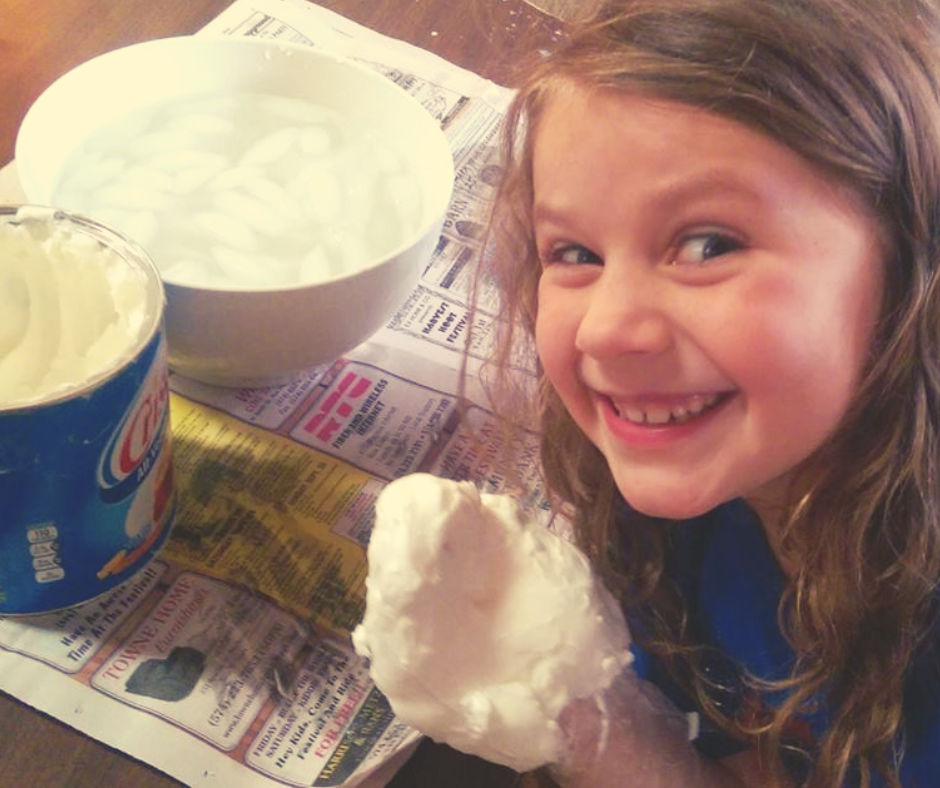
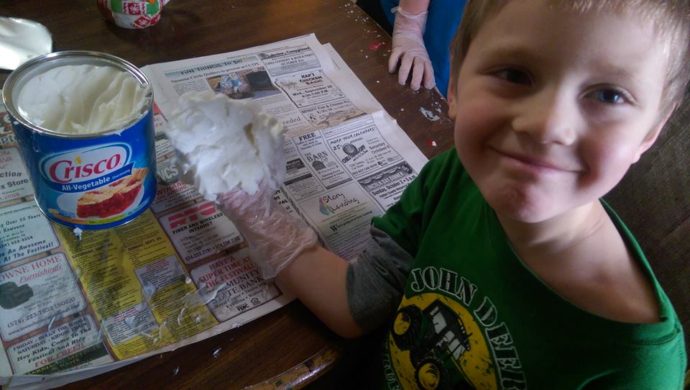
- Cover the gloved hand generously with shortening. Don’t skimp, thick layers work best.
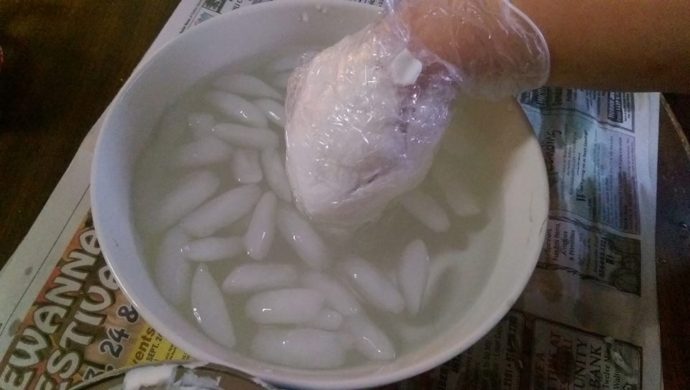
- Wrap the shortening-covered hand tightly with plastic wrap, sealing it around the wrist. (A rubber band can help.)
- Place the “blubber hand” into the ice water.
- For comparison, have them briefly dip their bare hand into the water. The difference is immediate and dramatic.
Kids are usually shocked at how warm the blubber hand feels compared to the unprotected one.
🐋 What Is Blubber, Exactly?
Blubber is a thick layer of fat found in marine mammals such as:
- whales
- seals
- walruses
- polar bears
- penguins
Not all fat is blubber, and blubber isn’t just fat. Blubber is specially adapted for:
- insulation
- buoyancy
- energy storage
It’s also historically important for many Indigenous Arctic communities.
👉 For a deeper explanation, National Geographic has a short overview on it blubber.
📚 Extending the Learning
This experiment pairs beautifully with other animal and snow activities we’ve done over the years. If you’re building out a winter unit or just looking for a few connected activities, these fit together really naturally:
- 🐧 Penguins – If your kids are curious about animals that can withstand the cold, you might enjoy our Penguin Study, which has some science and activities, including building a penguin learning basket!
- ❄️ Snow Dough Sensory Play – After science experiments, play time is needed. This snow dough recipe is a favorite for winter days when it’s too cold to go outside and works especially well for younger kids.
- 🧪 Snow Slime Experiment – For older kids and teens, this snow slime experiment adds a fun chemistry twist and keeps winter learning playful while still feeling educational.
- 🍿 Documentaries – We enjoyed Frozen Planet and The Polar Bear Family & Me
- ☃️ Winter Printable Learning Pack – Great for some down time while having fun learning about snow and the cold.
- 🤓 Our Favorite blubber animal books and toys! See what we used to extend learning!
These activities work well together for a winter science unit, homeschool co-op lesson, or even a relaxed snow-day learning block. This experiment naturally leads into geography, climate, animal adaptations, and even conservation conversations.
❄️ A Simple, Memorable Science Activity
This blubber experiment was a hit in our house and one of those activities kids remember long after it’s done. As a parent, I was honestly amazed by how effective the “blubber” layer was. It’s one thing to read about animal adaptations, but feeling it firsthand makes the concept stick.
If you try this blubber experiment, I’d love to see it! Share in the comments or tag me on Instagram and Facebook @bemandfam… it absolutely makes my day.
BEM and Fam 🙂
👉 Save This for Later
PS. This post has some affiliate links, read more about those here