
Age Appropriate Chores, A Gentle Way to Share the Load at Home
A Simple Guide for Families Easing into New Routines
When it comes to age appropriate chores, I try to approach them as support, not punishment, and as skills, not burdens. The goal isn’t a perfectly clean house. It’s helping kids learn responsibility in ways that feel doable and fair for their age and stage.
Why Age Appropriate Chores Matter
When chores match a child’s ability, they can:
- Feel capable instead of overwhelmed
- Contribute meaningfully to the household
- Build confidence and independence
- Learn life skills slowly, over time
Chores don’t need to be complicated, constant, or rigid. Even small, consistent responsibilities can make a difference.
A Gentle Approach to Chores
In our home, chores work best when:
- Expectations are clear but flexible
- Tasks are short and manageable
- Help is offered when needed
- Kids know their contribution matters
Some weeks go more smoothly than others… and that’s okay. The goal is progress, not perfection.
Why Chores Work Best When They’re Introduced Gradually
One thing I’ve learned over the years is that chores tend to work best when they’re a normal part of life, not sprung on people sudden.
If a teenager has never been expected to help around the house and then, overnight, is handed a long list of responsibilities, it’s almost guaranteed to cause frustration on both sides. It doesn’t feel fair to them, and it usually doesn’t feel successful for the parent either.
Chores are skills, and like any skill, they’re easier to learn when they’re introduced slowly and built over time. When kids grow up with small, age appropriate responsibilities, helping at home becomes part of everyday life rather than something that feels imposed later.
That doesn’t mean it’s too late if you’re starting now. It simply means starting small matters. One consistent task is often more effective than a full reset all at once.
The goal isn’t to suddenly change everything, it’s to make responsibility feel normal, expected, and manageable.
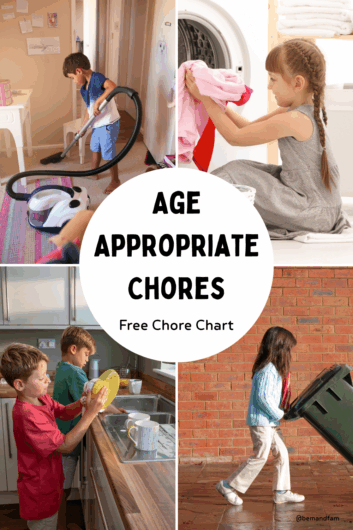
Examples of Age Appropriate Chores
Every family is different, but these examples can be a helpful starting point. Not every child needs to do every chore, choosing a few consistent responsibilities often works better than long lists.
Younger Children
- Putting toys away
- Helping set the table
- Matching socks
- Wiping low surfaces
Elementary-Age Kids
- Making their bed
- Feeding pets
- Emptying small trash cans
- Helping with laundry (sorting or folding)
- Clearing their place after meals
Tweens and Teens
- Loading or unloading the dishwasher
- Taking out trash or recycling
- Doing their own laundry
- Helping prep meals
- Cleaning shared spaces
Making Chores Visible (and Less Stressful)
One thing that made chores easier in our house, especially when the kids were younger, was putting them where everyone could see them.
At one point, we used a simple, DIY chalkboards in our upstairs hall with a short list of responsibilities for each kiddo. We painted boards with chalkboard paint. It wasn’t fancy, but it helped make chores feel expected instead of constantly “announced.”

Having chores written down does a few helpful things:
- It removes the need for repeated reminders
- It makes expectations feel clear and fair
- It helps kids see their role in the household
- It turns chores into part of the routine, not a power struggle
Visual reminders work especially well for kids and teens because they take the pressure off verbal prompting. The responsibility is still there, but it doesn’t feel personal or emotional.
Now that the kids are older, having the chores written down isn’t as important but to be honest… a master list can be helpful to anyone. In fact, my oldest son uses a whiteboard now, while my daughter has started to use a planner. With the kids still doing sports, having jobs, and our lives growing together as they become young adults living at home… I have considered getting a digital calendar for our kitchen.
Whether it’s a chalkboard, a printed chart, or a simple list taped inside a cabinet door, visibility matters.
Making Chores Feel More Doable
If chores feel like a struggle, it can help to:
- Start with just one or two tasks
- Tie chores to existing routines
- Write expectations down instead of repeating reminders
- Adjust expectations during busy seasons
Some days, help will still be needed and that’s okay because learning how to manage a home takes time.
A Simple Chore Chart to Get Started
To make implementing age appropriate chores easier, I’ve created a free, simple chore chart you can use at home.

It’s designed to:
- Work for different ages
- Stay flexible as routines change
- Support responsibility without pressure
It’s meant to support your home, not add another thing to manage. This chart accompanies a page in my Family Binder as part of a gentle home reset.
➡️ Grab the FREE Chore Chart here!
Final Thought
Chores don’t have to be complicated or constant to be meaningful. A few shared responsibilities can lighten the load, build skills, and help everyone feel more connected to the home they live in.
If you’re looking for more ideas, these are a few simple tools that work well:
- A small chalkboard or whiteboard
- Clipboards – I use one of these with a folder for random things. Though I use a planner, this becomes my portable “catch-all” and it works wonders
- Command hooks for hanging charts without damage
- A magnetic board on the fridge
- Digital Calendar
- My Family Binder – a binder I have made after years of planning for my family
➡️ Click here to see a list of more organizational items
If you use the chore chart or implement any age appropriate chores, I’d love to hear about it! Share in the comments or tag me on Instagram and Facebook @bemandfam… it absolutely makes my day.
BEM and Fam 🙂
👉 Save This for Later
🛒PS. This post has some affiliate links, read more about those here.