Elephant Activities for Kids
Simple Science and Hands-On Learning at Home
When I was younger, my grandmother used to call me her little elephant. She’d laugh and say it was because I remembered everything… every story, every detail, every tiny moment. At the time, I didn’t think much of it, but that’s part of why elephants have always stayed with me.
There’s something about them… the way they move, the way they stay close to each other, the way they seem to carry both strength and gentleness at the same time. Every time we’ve seen them at the zoo, I’ve found myself just standing there a little longer than expected.
While Save the Elephant Day (April 16) and World Elephant Day (August 12) are often when people talk about them, elephants are the kind of animal that fit into learning any time of year. They naturally pull kids in and make learning memorable.
These elephant activities for kids are kid-friendly looks at elephants… how they live, communicate, eat, and care for one another.
🐘 So… What Makes Elephants So Interesting?
Elephants don’t just stand out because of their size… they challenge what kids expect animals to be.
- They are the largest land animals on Earth
- They use their trunks like tools (and hands!)
- They live in strong family groups led by females
- They communicate in ways humans can’t always hear
Science Facts About Elephants
- An elephant’s trunk has over 40,000 muscles
- They can “hear” through vibrations in the ground
- Elephants have incredible long-term memory
- Their ears help regulate body temperature
- They can drink up to 50 gallons of water per day
- Baby elephants stay close to their mothers for years
Fun Facts Kids Love
- Elephants can’t jump (at all!)
- They use mud and dust like sunscreen
- A group of elephants is called a herd
- Baby elephants suck their trunks like a thumb
- They show signs of empathy and even grief
⭐ Hands-On Elephant Activities
Each activity connects to how elephants actually live, how they stay cool, move, remember, and survive in their environments.
1. Mud Play (Why Elephants Need Mud)
If you’ve ever seen an elephant covered in mud, it’s not just because they enjoy it (though they probably do). Mud actually plays an important role in how elephants stay healthy.
It helps:
- Cool their bodies in hot climates
- Protect their skin from the sun
- Keep bugs and parasites away
In a lot of ways, mud acts like sunscreen, bug spray, and air conditioning all at once. You don’t need anything complicated to explore this.
If the weather allows, this can be as simple as letting kids have a true “mud day” outside, digging, mixing water into dirt, and just experiencing it the way elephants would.
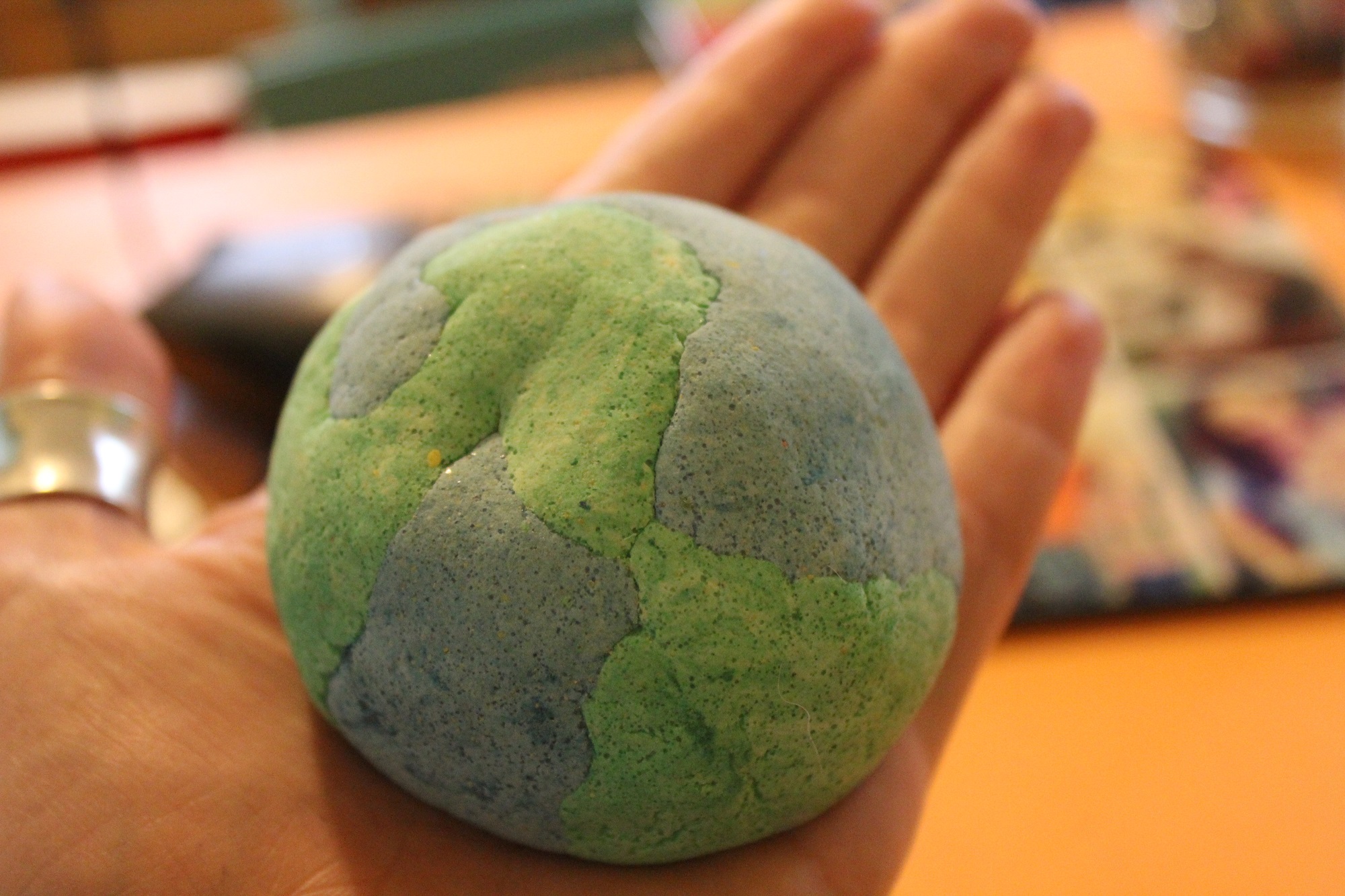
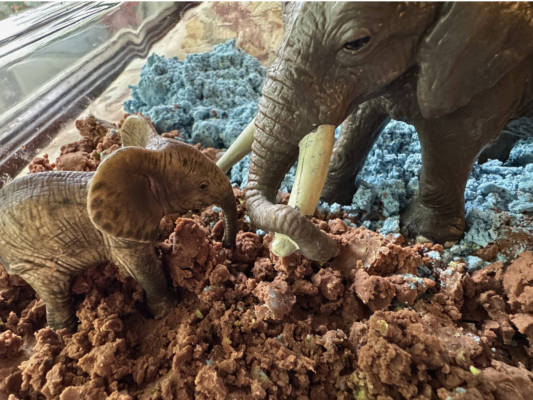
If you’d rather keep things contained (or you’re indoors), a simple mud dough works really well for this. It gives kids the same sensory experience without quite as much cleanup, and you can add small animal figurines or just let them explore freely.
👉 We’ve used these mud dough and water dough recipes (both pictured above) at home when learning about various animals and habitats, and it’s one of those activities that ends up lasting longer than you expect, but in a good way.
What I love about this one is how natural it feels. Kids don’t need instructions. They don’t need rules. They just start exploring… and in doing that, they’re actually understanding something real about how animals live.
2. Elephant Water Carry Challenge (How Powerful Is a Trunk?)
Elephants don’t just use their trunks to drink… they use them to carry water too. In fact, an elephant’s trunk can hold up to about 2–2.5 gallons of water at once before spraying it into their mouth or onto their body. That’s a lot more than it sounds.
To help bring that idea to reality, try a fun elephant challenge at home.
You’ll Need:
- Two buckets or containers
- A sponge (or cup, baster, or whatever you have)
- Tape or marker to make a “fill line”
- Water
What To Do:
- Fill one bucket with water
- Mark a line on the second bucket that is equal to the water filled in the first bucket (this is your goal)
- Have kids transfer water using only the sponge or whatever they chose (cup, baster…)
They’ll quickly notice:
- Water drips
- It takes multiple trips
- It’s harder than it looks
Then compare:
- How many trips did it take you?
- How much water did you lose along the way?
- An elephant could do this in just one go.
👉 It’s a simple way to feel the difference between human tools and an animal perfectly designed for its environment.
3. Elephant Memory Moment
Elephants are known for something pretty incredible, their memory. They can remember water sources from years earlier, migration paths across long distances, and other elephants, even after being apart for a long time.
Some researchers believe this is one of the reasons elephants are able to survive in changing environments. Their memory helps them return to places that are safe, familiar, and full of resources. It’s also part of why they stay so connected to their families.
This is a simple way to explore that idea at home.
You can try:
- A quick matching or memory game
- A “what’s missing?” tray (remove one item and guess what’s gone)
- Or even reading a short story and recalling details afterward
You can frame it like this… “Let’s see if you have an elephant memory.” and then do one or all of these activities. We have used all of these but I like our favorite is the “what’s missing” tray. You simply collect random items, put them on the tray or table, take one away when their eyes are closed, and see if they can remember what was there.
It isn’t explicitly about elephants, but it ties into one of their traits in a memorable way!
4. Elephant Habitat Map (African vs. Asian)
Elephants don’t all live in the same places, and once you start looking at a map, that becomes really interesting.
Have kids find:
- Africa → home to African elephants
- Asia → home to Asian elephants
Even this simple step helps kids start connecting animals to real places in the world. From there, you can notice a few key differences:
| Feature | African Elephant | Asian Elephant |
|---|---|---|
| Size | Larger overall | Slightly smaller |
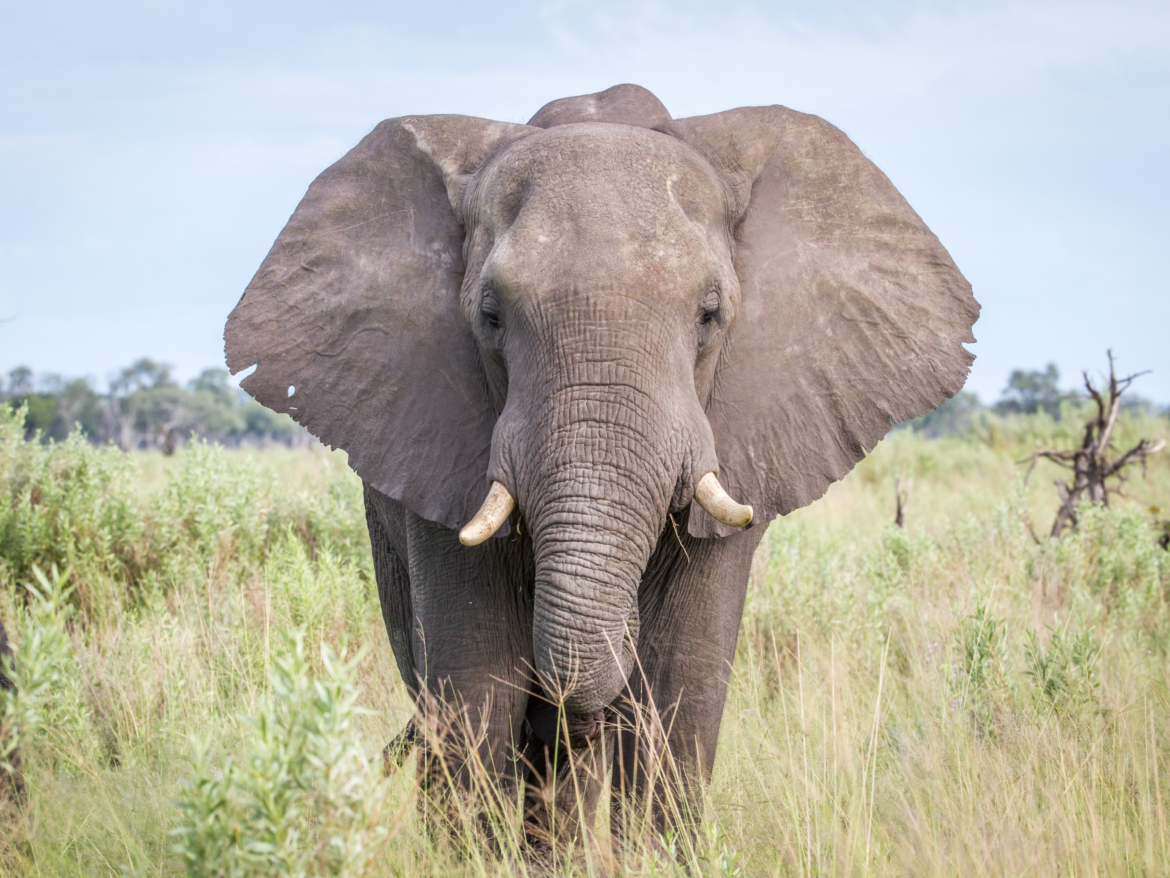
| Ears | Very large (often shaped like Africa) | Smaller, rounded |
| Habitat | Grasslands, savannas, some forests | Mostly forests and jungles |
| Head Shape | More rounded | More domed with two humps |
| Trunk Tip | Two “finger-like” tips | One “finger-like” tip |
| Tusks | Males and females often have tusks | Mostly males have tusks |
| Back Shape | Slight dip in the back | More rounded/arched back |
You don’t have to go too deep here, just noticing that they’re different is enough to start.
👉 If your kids enjoy this kind of comparison, I’ll be including a simple map and a closer look at both African and Asian elephants in the upcoming Elephant Unit.
🐘 Elephant Learning Unit – In development
I’m currently working on an Elephant Learning Pack to go alongside these science activities. It’s designed to help kids understand not just elephants, but the environment they depend on.
• Detailed life cycle pages
• Elephant comparison charts
• Habitat & ecosystem maps
• Label anatomy
• STEM measurement activities
👉 Notify me when the Elephant Unit is ready
Build an Elephant Learning Basket

To extend learning gently, here are a few things we actually use when we learned about elephants, or I make recommendations to students.
• Elephant figurines
• Puzzles
• Elephant books and more
👉 See our Elephant Learning Favorites here

Free Printable: Science Log

If your kids enjoy these activities, the Science Log works perfectly here, for observations, recording ideas, or sketching habitats. It’s the same one we use for STEM posts throughout the year.
Kids can:
- Sketch life cycles
- Record jump measurements
- Write habitat observations
- Compare frogs to other amphibians
👉 Download the free Science Log
🐘 Elephant Wrap-up
If you want to build out a full elephant day (or week) at home, here are a few extras our family has loved:
• Our Favorite Elephant Toys
A simple, durable elephant figurine or play set goes a long way for sensory play and storytelling.
See our favorite elephant pick here.

• Mud Dough
Kid-favorites and pair perfectly with elephant sensory worlds.
Easy Mud Dough Recipe
• Elephant Learning Basket (Amazon List)
Books, figurines, STEM tools, and cozy extras to make winter learning simple.
Browse the Elephant Learning Basket
• Elephant Science Unit
Great for those that really want to learn more and have a full elephant experience.
Get your Elephant Unit here – coming soon
• Quick Elephant Watch
If you want to wind down after the activities, try an elephant documentary clip or a behind-the-scenes zoo video. I recommend Elephant- Spy in the Herd documentary (by the BBC and my kids liked this one) or an elephant cam, like the one at the Elephant Sanctuary in Tennessee (though others have them too).
❤️ Final Thoughts on Elephants
Elephants are easy to slow down for. They don’t rush, they stay close to their families, and they seem to move with purpose. Every time we’ve seen them, they’ve been one of those animals we just stand and watch.
Not just because they’re interesting, but because they remind us intelligence comes in different packages… and that is worth learning!
You don’t need a full plan or a perfect setup for this. Just a little mud, a quick activity, a short conversation… it all counts.
If you try any of these Elephant activities for kids, I’d love to see them! Share in the comments or tag me on Instagram and Facebook @bemandfam… it absolutely makes my day, and I really do enjoy seeing it.
BEM and Fam 🙂