
Polar Bear Science Activities for Kids (Hands-On STEM and Fun)
Cold Places, Quiet Giants, and Polar Bear Science Activities
One of our favorite documentaries when the kids were little was My Polar Bear Family and Me. We came across it while we were learning about the Arctic, as an extension to our Canadian unit. We learned about the people who live there, the animals, and what daily life looks like in such a cold place.
What caught my attention wasn’t just the bears themselves, but the questions that followed.
- How do they raise cubs in that environment?
- How do animals, and people, actually live there year-round?
Polar bears naturally stood out because they are adorable, but they became interesting because they made us stop and think. They’re big, quiet, and built for a world that feels extreme to most of us.
That’s why polar bear science works so well at home. It’s practical. It leads naturally into conversations about insulation, movement, camouflage, and survival… things kids can actually explore with simple activities.
Polar Bear Day (February 27th) is a fun excuse to learn about them, but everything here works any time of year. You don’t need a big setup or a full unit. Just a few hands-on ways to help kids understand how polar bears live where they do.
🐻❄️ What Makes Polar Bears So Fascinating?
Polar bears challenge a lot of assumptions kids have about bears:
- Their skin is black and their fur only looks white
- They don’t hibernate the same way other bears do
- They are excellent swimmers
- They live in one of the harshest environments on Earth
Polar Bear Science Facts
- Polar bear fur is actually transparent allowing the sun’s heat to “go through” it to warm the skin. The fur then reflects the light.
- They have a thick layer of fat (blubber) that keeps them warm in icy water
- Their paws are wide and slightly webbed, helping them swim and walk on ice
- Polar bears rely heavily on sea ice to hunt and travel
Fun Facts Kids Love
- Polar bears can smell seals nearly a mile away
- Cubs are born tiny, about the size of a guinea pig
- Polar bears can swim for days without resting
- Their fur repels water, helping them stay dry and warm
⭐ Hands-On Polar Bear Science Activities
Each activity connects to real polar bear adaptations… insulation, camouflage, movement, and survival.
1. Polar Bear Blubber Test

This activity works just as well for polar bears as it does for penguins or any animal that has to survive in extreme cold weather… because blubber is a shared survival tool.
With this, kids compare icy water with and without a “blubber layer” and instantly understand why polar bears can swim in freezing Arctic seas.
👉 Try the Blubber Experiment here
2. How Far Can a Polar Bear Swim?
Polar bears are incredible swimmers. In the wild, they’ve been documented swimming 30 miles or more without resting, sometimes much farther, as they travel between ice and hunting grounds. That distance is hard to picture… so this activity helps kids feel what 30 miles actually means.
Option 1: Measure What You Know (Great for All Ages)
Start with a place your family already recognizes. Measure the length of your yard or the distance to a nearby park, store, or restaurant
Then ask:
- How many times would you need to walk back and forth to equal 30 miles?
- Would that take one afternoon… or many days?
This alone usually leads to a moment of pause, kids realize quickly how far polar bears really travel.
Option 2: Map It Out (Geography Focus)
Pull out a local map or use Google Maps. Find your home and then find a location 30 miles away. Trace the route.
Optional extension:
- Choose a fun destination 30 miles away (park, zoo, ice cream shop)
- Drive there and talk about the time it takes
- Compare that to how long a polar bear would be swimming
This connects geography to scale, distance, and movement.
Option 3: Advanced Challenge (Math + Science)
For older kids, compare speed. Explain the following…
- Polar bears swim about 6 miles per hour
- Cars often travel around 60 miles per hour
Then ask…
- How long would it take a polar bear to swim 30 miles? (answer, 5 hours)
- How long would it take a car to drive the same distance? (answer, 30 minutes)
- What does that tell us about endurance vs speed?
This can open up some conversations about speed and is a fun way to add a little math too!
3. Arctic Camouflage Test
Polar bears blend into their environment, but how well and why?
You’ll Need:
- White objects (cotton balls, paper scraps, small toys)
- A white colored background (white paper or white towel)
- A colored background (blue towel, dark paper, table)
Place white objects on both light and colored backgrounds and ask…
- Which ones are easiest to see?
- Which ones disappear?
- Why would this matter to the polar bear (or other arctic animals that grow white fur like the fox and hare)?
This naturally leads into conversations about adaptation and survival.
4. Polar Bear Snow Habitat Play

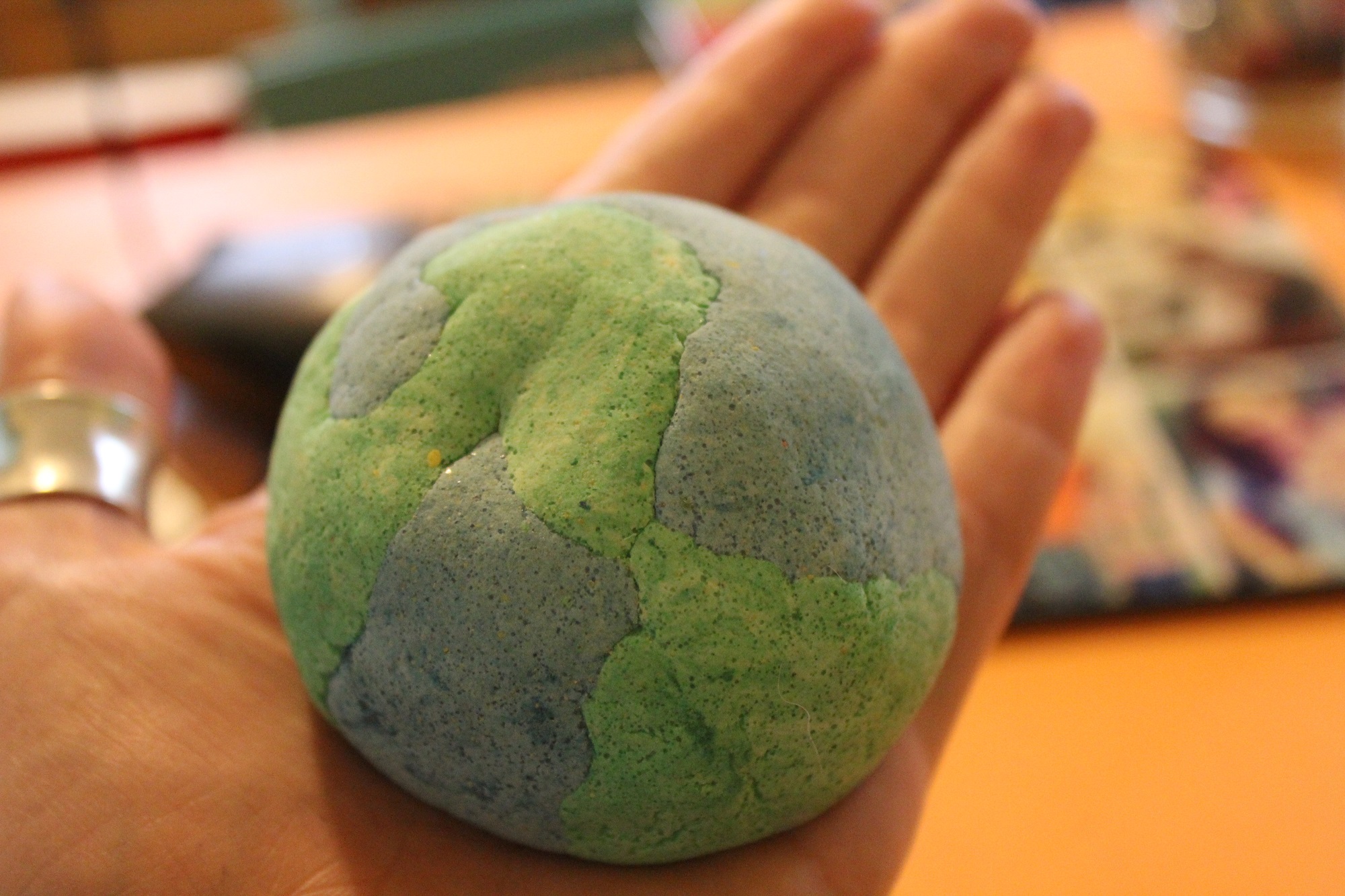
If you’ve already made Snow Dough or Snow Slime, this is the perfect time to reuse it, and if you haven’t… it is a great time to try!
Set out:
- White dough or slime
- Ice cubes
- Blue water
- Small polar bear figures (or paper cutouts)
Kids can build:
- Ice platforms
- Swimming paths
- Resting spots for cubs
👉 Snow Dough Recipe (shown in pic)
👉 Snow Slime How-To
This works beautifully across ages and invites both science and storytelling.
🛒 Build a Polar Bear Learning Basket
If you want to extend learning gently, a small basket goes a long way. I put together a Polar Bear Amazon list with:
- Polar bear figurines
- Picture books
- Arctic animals
- Polar bear chapter books
- Winter sensory extras
👉 Polar Bear Learning Basket Amazon List

📄 Free Printable: My Science Log
If your kids enjoy these activities, the Science Log works perfectly here, for observations, recording ideas, or sketching habitats. It’s the same one we use for STEM posts throughout the year.
👉 Download the free Science Log here
⭐ Polar Bear & Arctic Learning Pack – In Development
I’m currently working on a Polar Bear & Arctic Learning Pack to go alongside these science activities. It’s designed to help kids understand not just polar bears, but the environment they depend on.
Planned pages include:
- Polar bear facts (kid-friendly, science-based)
- Adaptations mini-book (fur, blubber, paws, swimming)
- Arctic habitat & geography maps
- Sea ice & distance activities
- Label-the-polar-bear diagram
- Observation & science log pages
- Writing prompts and fact cards
👉 Notify me when the Polar Bear Pack is ready
🐻❄️ More Polar Bear Learning Ideas
If you want to build out a simple polar bear day (or week), here are a few extras that work well across ages.
• Polar Bear Learning Basket
A small collection of books, figurines, and hands-on tools makes Arctic learning easier to revisit.
👉 Browse the Polar Bear Learning Basket (Amazon)
• Snow Dough & Snow Slime
Perfect for Arctic habitat play and revisiting cold-climate concepts.
👉 Easy Snow Dough Recipe
👉 Snow Slime How-To
• Free Science Log
Great for recording observations, sketches, measurements, and reflections… works for learning about, polar bears, and all our STEM studies.
👉 Download the free Science Log
• Watch & Learn
If you want to wind down after the activities, My Polar Bear Family and Me is a wonderful documentary that sparked many of our own Arctic conversations. You can also check out a polar bear cam, like the one at the Alaska Zoo.
🐻❄️ Final Thoughts on Polar Bears
Polar bears remind us that strength doesn’t always look loud. Sometimes it looks like patience, balance, and the ability to thrive in quiet, difficult places.
Studying polar bears gives kids a chance to slow down, observe, and understand how animals are shaped by their environments… and how small adaptations can make an enormous difference.
Whether you explore polar bears on Polar Bear Day (Feb 27th) or any day at all, these simple science activities bring real learning into winter afternoons.
If you try any of these polar bear science activities, I’d love to hear about it. Share in the comments or tag your pics @bemandfam on Instagram and Facebook, those glimpses into real homes mean more than you know.
BEM & Fam 🙂
👉 Save This for Later

🛒PS. This post has some affiliate links, read more about those here.